Study in Australia from Nepal
AustraliaA degree that works after graduation.
Australia stays Nepal’s most chosen destination for one reason: the pathway from classroom to career is written into the system. Eight universities sit in the global top 100, work rights come attached to the student visa, and the post-study work stream gives you two to four years to build real experience.
 Sydney Harbour, New South Wales
Why Australia
What makes it
worth the move.
The case for Australia is specific, not general. These are the four things that actually change outcomes for Nepali students.
Qualifications that travel
Every course is registered on CRICOS and mapped to the Australian Qualifications Framework, so your degree is read correctly by employers and licensing bodies worldwide.
Work while you study
Student visa holders may work up to 48 hours per fortnight during session and unlimited hours in scheduled breaks — enough to cover a meaningful share of living costs.
A genuine PR pathway
Graduate visas, state nomination and skilled occupation lists mean nursing, IT, engineering and accounting graduates have a mapped route to permanent residency.
A large Nepali community
Sydney, Melbourne, Brisbane and Perth all have established Nepali communities, temples and student associations — arrival is far less lonely than it sounds.
Universities
Where our students go.
A shortlist should always span reach, match and safety. These are the institutions we most often place students in — the right one for you depends on your grades, budget and target occupation.
University of Melbourne
Ranked first in Australia. Strong in medicine, law and engineering; competitive entry.
University of Sydney
Broad course catalogue with an excellent business school and strong graduate employment.
UNSW Sydney
Engineering and computer science powerhouse; the trimester system means faster completion.
Monash University
Large international cohort, well known for pharmacy, IT and business.
University of Queensland
Research-intensive with strong agriculture, environmental and health programs.
RMIT University
Practical, industry-linked degrees in IT, design, engineering and construction.
Deakin University
Popular for nursing, IT and MBA with generous credit transfer and scholarships.
Griffith University
Well priced, strong in health, hospitality and aviation with good scholarship access.
Popular Courses
Fields that lead somewhere.
We advise on course choice from the destination country's demand side, not from what is easiest to get into.
Nursing
Registered nurse pathway with placement hours built in; strong demand nationally.
Information Technology
Cyber security, data analytics and software development — the largest Nepali cohort.
Accounting & Finance
CPA-accredited degrees that also sit on skilled occupation lists.
Engineering
Civil, mechanical and electrical, accredited by Engineers Australia.
Hospitality & Tourism
Placement-heavy programs in the Gold Coast, Melbourne and Sydney.
Social Work
AASW-accredited masters; consistently in demand across states.
Cost of Study
What it really costs.
Indicative figures for planning. In your counseling session we build a full budget in Nepali rupees against your specific institution, city and family situation.
| Item | Indicative range (AUD / year) | Notes |
|---|---|---|
| Bachelor tuition | 20,000 – 40,000 | Nursing and engineering sit at the higher end |
| Master tuition | 24,000 – 45,000 | MBA and health programs cost most |
| Living costs | 29,710 (single) | The savings figure the Department requires for a visa |
| OSHC health cover | 650 – 800 | Mandatory for the full visa duration |
| Student visa fee | 2,000 | Subclass 500 application charge |
Figures move with policy and exchange rates. We confirm current requirements against the official source before any application is filed.
Admission Requirements
What you need
to qualify.
Requirements vary by institution, but these four areas decide every application.
Academic
+2 or A-Levels with 55–70% for bachelor entry; a recognised bachelor degree for masters, with some programs asking for work experience.
English
IELTS 6.0–6.5 overall with no band under 5.5–6.0 is the common bar. PTE 50–58 and TOEFL 60–79 are widely accepted.
Financial
Evidence of tuition plus living costs, with a clear and documented income source. Education loans from Nepali banks are accepted.
Genuine Student
A written statement explaining your course choice, your ties to Nepal and your plans after study — assessed under the Genuine Student requirement.
Documents we'll prepare with you
Bring what you have. We build the rest, and we check every page before anything is filed.
Intakes
When to apply.
Start eight to ten months before your intended intake. Applications filed late in a cycle face fewer places, tighter scholarship budgets and slower visa processing.
February
The main intake. Widest course choice and best scholarship availability.
July
Second major intake; almost all universities offer a July start.
November
Limited to some private institutions and pathway providers.
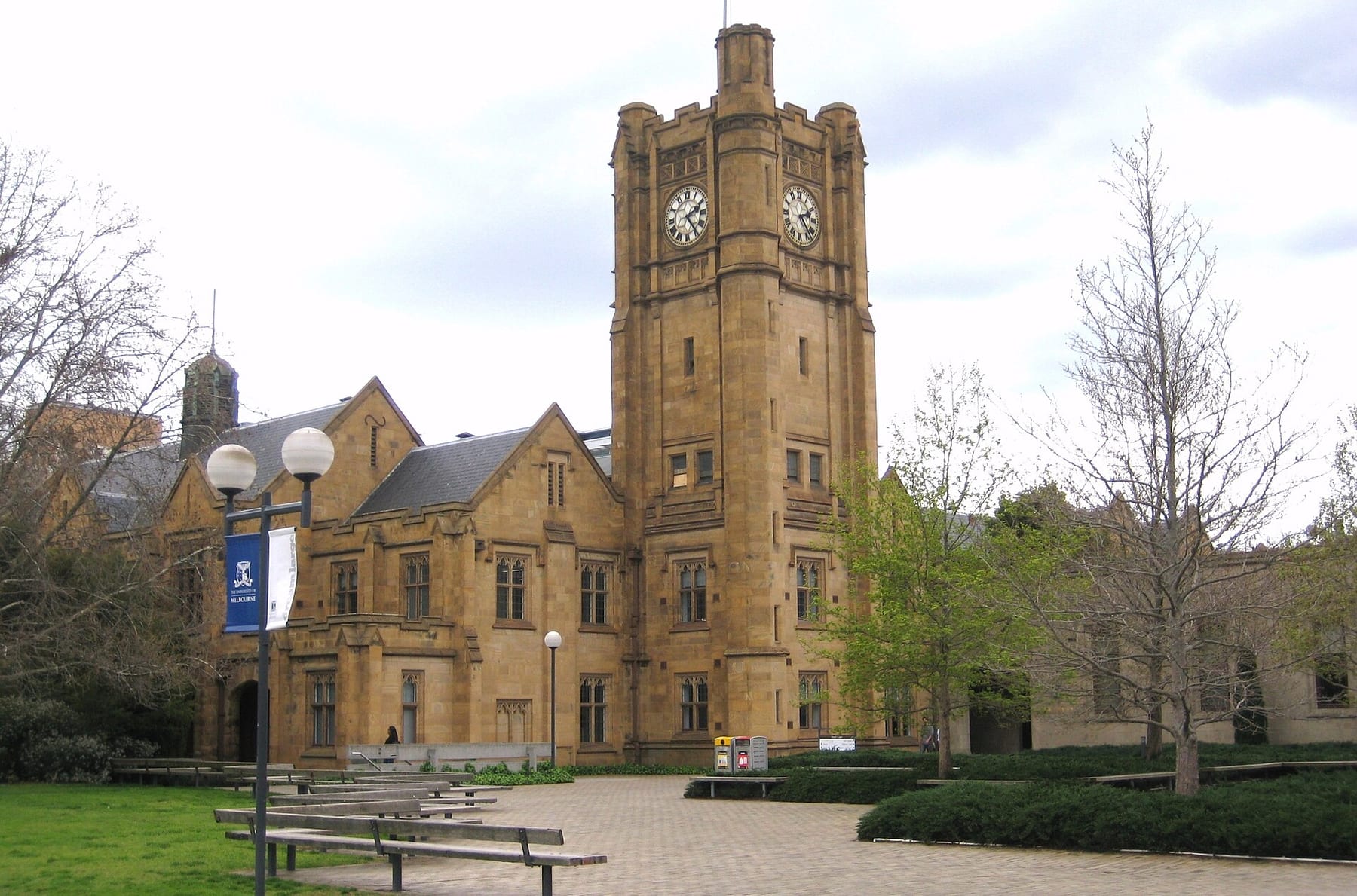 University of Melbourne, Parkville campus
Visa Process
Offer letter to
departure.
Five stages, handled by our documentation desk. You are told exactly what is needed at each one, and what it will cost.
Course selection and offer letter
We shortlist by your grades, budget and target occupation, then apply for conditional offers — usually two to four weeks.
Genuine Student statement
We help you draft the written responses on course choice, financial capacity and post-study intentions in your own voice.
Accept offer and receive CoE
Pay the initial tuition instalment; the institution issues your Confirmation of Enrolment.
OSHC and health checks
Overseas Student Health Cover is arranged, plus a medical examination with an approved panel clinic.
Lodge subclass 500 and biometrics
Application filed online with all documentation. Processing generally runs four to twelve weeks.
“The visa is not a lottery. It is a file — and a well-built file gets approved.”
Work rights &
after graduation
Scholarships
Money you might not be asking for.
Most students who qualify for funding never apply for it. We check every award your profile fits before submitting an application.
University merit scholarships
20–50% tuition reduction, awarded automatically on grades at many universities — no separate application.
Australia Awards
Full government scholarships for development-related postgraduate study; highly competitive and applied for directly.
Regional study incentives
Studying in a designated regional area can bring lower fees, extra graduate visa time and additional points for migration.
Questions We Get
Honest answers.
How much money do I need to show for an Australian student visa?
Can I take my spouse with me?
Is a study gap a problem?
Which is cheaper: Australia or Canada?
Compare
Other destinations.
Almost no student arrives certain. Read two or three of these side by side before you decide.
Is Australia right
for you?
Bring your transcripts and your budget. In one free session we will tell you honestly whether Australia fits — and what the alternative would be if it does not.
Walk-in welcome · New Baneshwor, Kathmandu