Study in the USA from Nepal
United
StatesWhere funding follows merit.
The United States hosts more Nepali students than almost anywhere else, and for a specific reason: no other system offers this much financial aid to strong international applicants. Sticker price and actual cost are two very different numbers here.
 New York City, New York
Why United States
What makes it
worth the move.
The case for United States is specific, not general. These are the four things that actually change outcomes for Nepali students.
Financial aid at scale
Liberal arts colleges and private universities offer need-based aid and merit scholarships to international undergraduates — sometimes covering most of the cost.
Flexibility in the degree
Declare your major in the second year, minor in something unrelated, change direction without starting over. No other system allows this.
Research and OPT
Undergraduate research access, assistantships at graduate level, and up to three years of Optional Practical Training for STEM graduates.
The community college route
Two years at a community college then transfer to a state university — the same degree at a substantially lower total cost.
Universities
Where our students go.
A shortlist should always span reach, match and safety. These are the institutions we most often place students in — the right one for you depends on your grades, budget and target occupation.
Massachusetts Institute of Technology
Engineering and computer science at the global frontier; need-blind for internationals.
Stanford University
Silicon Valley adjacency with unmatched entrepreneurship networks.
University of Texas at Austin
Large public university, strong engineering and business, moderate tuition.
Arizona State University
Huge program range with generous merit awards for international students.
University of Illinois Urbana-Champaign
Top-tier computer science and engineering at public university fees.
Purdue University
Engineering and aviation specialist with a very large Nepali student body.
Southeast Missouri State University
Affordable, welcoming, and a well-known first stop for Nepali students.
Texas A&M University
Strong engineering and agriculture with substantial research funding.
Popular Courses
Fields that lead somewhere.
We advise on course choice from the destination country's demand side, not from what is easiest to get into.
Computer Science
The most-chosen major; STEM designation brings three years of OPT.
Engineering
Civil, electrical, mechanical and biomedical, with research assistantship access.
Business Analytics
STEM-designated business master’s — the reason this field has grown so fast.
Public Health
MPH programs with strong funding options for medical graduates.
Data Science
Master’s programs across public universities with assistantship potential.
Nursing
BSN and MSN routes leading to NCLEX licensure and immediate employment.
Cost of Study
What it really costs.
Indicative figures for planning. In your counseling session we build a full budget in Nepali rupees against your specific institution, city and family situation.
| Item | Indicative range (USD / year) | Notes |
|---|---|---|
| Community college tuition | 8,000 – 14,000 | Two years, then transfer with full credit |
| Public university tuition | 20,000 – 35,000 | The out-of-state rate applies to internationals |
| Private university tuition | 35,000 – 60,000 | Before scholarships and need-based aid |
| Living and housing | 10,000 – 18,000 | Varies sharply between cities and college towns |
| SEVIS + visa fee | 350 + 185 | Paid before the F-1 interview |
Figures move with policy and exchange rates. We confirm current requirements against the official source before any application is filed.
Admission Requirements
What you need
to qualify.
Requirements vary by institution, but these four areas decide every application.
Academic
+2 with strong grades and a full transcript for undergraduate entry; a four-year bachelor is preferred for graduate study, though three-year degrees are accepted with review.
Standardised tests
SAT is optional at many universities but strengthens scholarship claims. GRE or GMAT is required by many graduate programs.
English
TOEFL 79–100, IELTS 6.5–7.0, or Duolingo 110–125 depending on the institution.
Financial documents
An affidavit of support and bank evidence covering the first year, matched to the figure on your I-20.
Documents we'll prepare with you
Bring what you have. We build the rest, and we check every page before anything is filed.
Intakes
When to apply.
Start eight to ten months before your intended intake. Applications filed late in a cycle face fewer places, tighter scholarship budgets and slower visa processing.
Fall (Aug/Sep)
The main intake. All programs, all scholarships, full funding cycle.
Spring (Jan)
Widely available at public universities; a smaller applicant pool.
Summer (May)
Limited, mostly for specific graduate programs and language study.
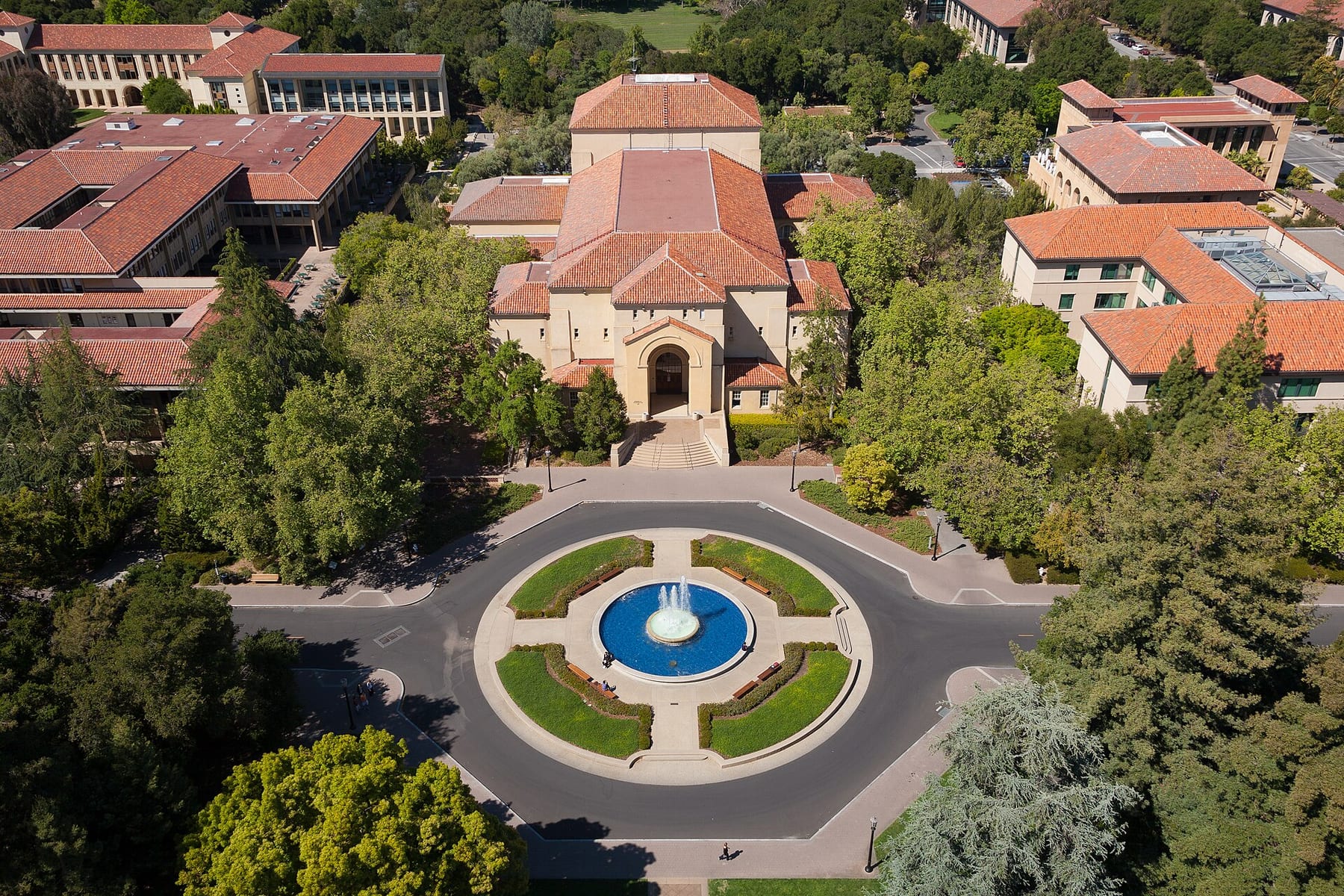 Stanford University, California
Visa Process
Offer letter to
departure.
Five stages, handled by our documentation desk. You are told exactly what is needed at each one, and what it will cost.
University shortlist and applications
We build a list across reach, match and safety institutions, then manage essays, recommendations and portals.
Offers and financial aid decisions
Compare total cost after aid, not sticker price. Aid letters often change which offer makes sense.
I-20 issuance
Submit financial documents to your chosen institution; it issues the I-20 confirming your admission and funding.
SEVIS fee and DS-160
Pay the SEVIS I-901 fee, complete the DS-160 form, and book your interview at the Embassy in Kathmandu.
Visa interview
The F-1 interview is short and decisive. We run mock interviews on your specific profile, funding and study plan.
“The visa is not a lottery. It is a file — and a well-built file gets approved.”
Work rights &
after graduation
Scholarships
Money you might not be asking for.
Most students who qualify for funding never apply for it. We check every award your profile fits before submitting an application.
Merit scholarships
USD 5,000–25,000 per year awarded on grades and test scores; often renewable across the degree.
Need-based aid
A group of well-endowed private colleges consider international applicants for need-based aid, sometimes meeting full demonstrated need.
Graduate assistantships
Teaching and research assistantships that waive tuition and pay a stipend — the standard funding route for master’s and doctoral study.
Questions We Get
Honest answers.
Is the US visa interview really that hard?
Can I afford the United States on a middle-class Nepali budget?
Do I need the SAT?
What happens if my visa is refused?
Compare
Other destinations.
Almost no student arrives certain. Read two or three of these side by side before you decide.
Is the United States right
for you?
Bring your transcripts and your budget. In one free session we will tell you honestly whether United States fits — and what the alternative would be if it does not.
Walk-in welcome · New Baneshwor, Kathmandu